Profit Loss SpreadsheetSix names that can match a statement
Three headings can sketch a month. They cannot show what cleared.
Named in full
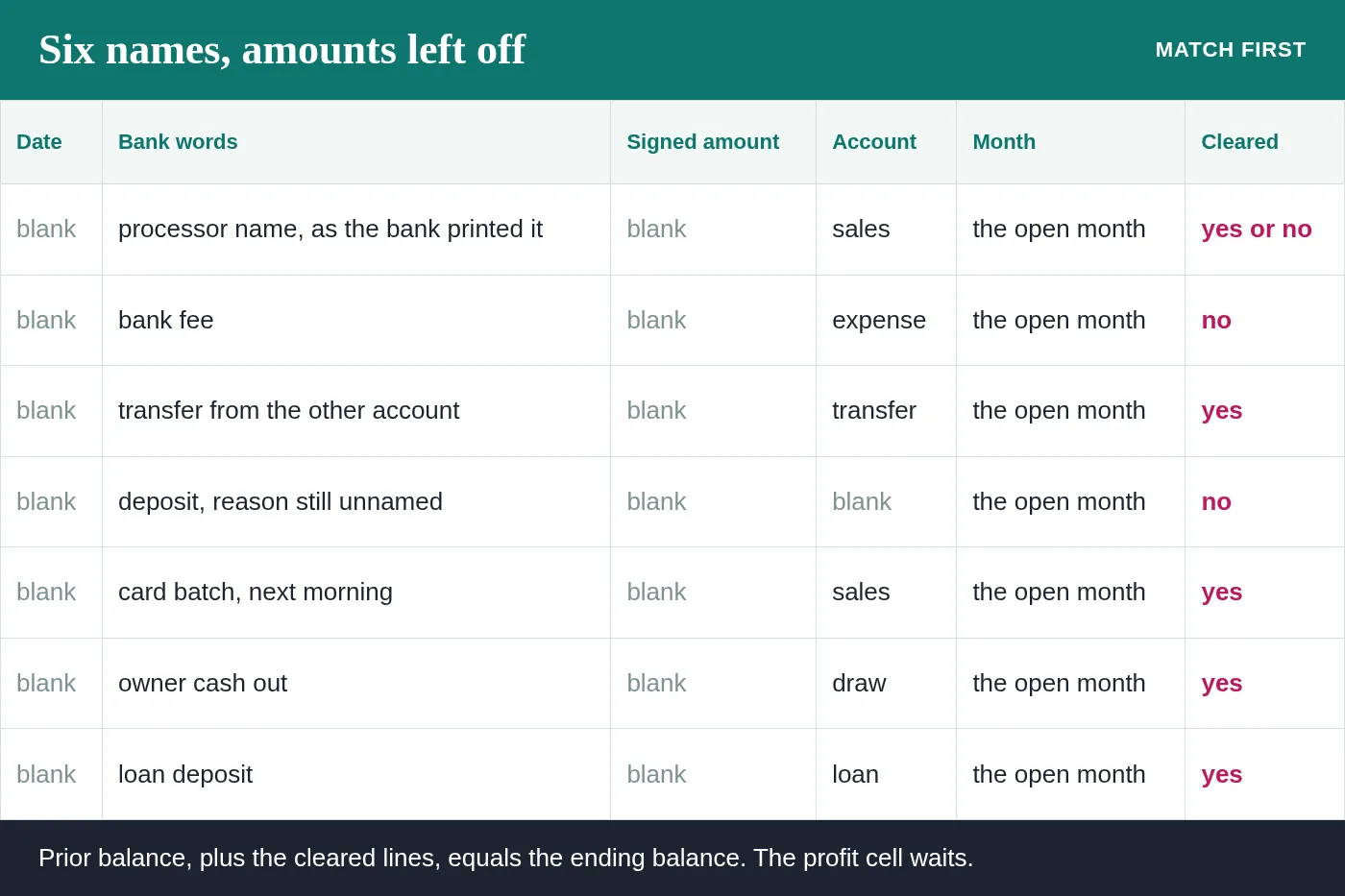
Date comes first, because a line without a day cannot be found on a statement. Next is the bank's own description, copied as it appears, not improved into a cleaner phrase. A signed amount follows, so a direction is visible. Then the account the line belongs to, then the month, then a simple cleared mark, yes or no.
Those six can be tested. Prior balance, plus the cleared lines for that account, should equal the ending balance on the statement. If the equality fails, the next hour is a search for the line, not a polish of the profit cell.
People skip the bank's words because they look ugly. A processor name, a truncated shop name, a string of digits. That ugliness is the point. It is how you find the same line on the statement a month later. A rewritten description is a story. The bank's words are the evidence.
What the cleared mark is doing
A line can be real and still not have cleared. A check you wrote, a card charge that posts next month, a deposit the bank has not credited. If those lines are treated as cleared, the file and the statement part company, and every total after that inherits the gap.
Cleared is a date on the statement, not a verdict on the shop. The line is already on the statement, or it is still on the way. Profit can include a sale that has not settled, if the books follow an accrual idea, and the cash column still has to tell the truth about the bank. Mixing those two jobs in one cell is how the file stops matching.
Columns that stay beside profit
Draws, loan proceeds, loan principal, and transfers between the company's own accounts do not belong in income, cost, or expense. They need names of their own so they can change cash without changing profit. A file that has nowhere to put them will put them in the profit cell, because that is the only cell left.
We see this when a second account is opened for payday or for sales tax and the transfers between them are typed as income on the way in and as an expense on the way out. The shop did not earn that money twice, and it did not spend it. The columns are how you stop the double count.
A month you can hand to a return
Once the six names are in place and one month matches, the next month is the same shape. The chart of accounts can point each account at the line of the return it feeds, so meals, depreciation, and owner pay are not discovered in March. That map is a list, not a promise about a result.
Steven Palmieri keeps that map with the file, in the Tax CFO role. The books, the payday setup, and the return sit together, so the columns are not a side project abandoned when the form arrives. If your file already has the six names, say so. If it has three headings, say that too.
Which of the six names are missing
You will be talking to the Steven Palmieri practice.